Do Women Over 40 Need Sunscreen Every Day? The Non-Negotiable Step in Every Skincare Routine
SPF After 40: The Non-Negotiable Step in Every Skincare Routine
If you do nothing else for your skin, wear sunscreen. Not occasionally. Not just at the beach. Not only in summer. Every Single Day.
Because the sun is the leading preventable cause of premature skin aging. Not genetics. Not hormones. Not stress. Sun Exposure.
And after 40, the effects of decades of exposure begin to show more clearly.
The Truth About Sun Damage
Research estimates that UV exposure may account for up to 80% of visible facial aging.
This includes:
• Fine lines
• Wrinkles
• Sagging
• Uneven pigmentation
• Broken capillaries
• Loss of elasticity
• Rough texture
This process is called photoaging. It happens gradually, silently, and cumulatively. And it does not reverse easily, if at all.
Why Sun Damage Accelerates After 40
As estrogen declines, collagen production slows. Skin becomes thinner. Barrier function weakens. Repair processes become less efficient.
This means:
• UV damage accumulates more quickly
• Pigmentation becomes more stubborn
• Inflammation lingers longer
• Skin takes longer to recover
You may not have noticed sun damage in your 30s. But in your 40s and beyond, the skin’s ability to compensate decreases. SPF becomes protective medicine.
UVA vs. UVB: Why Both Matter
UVB rays are responsible for burning. UVA rays penetrate deeper and are responsible for:
• Collagen breakdown
• Pigmentation
• DNA damage
• Long-term structural aging
UVA rays pass through clouds. They pass through windows. They are present year-round. If you can see daylight, your skin is exposed. That is why daily protection matters even on overcast days.
What SPF Actually Does
Sunscreen filters protect the skin primarily by absorbing UV radiation. Mineral filters such as zinc oxide and titanium dioxide also reflect and scatter a small portion of UV light.
Both can be effective when properly formulated and applied correctly. The key is consistency. SPF is not a corrective step. It is a preventative step. And prevention is exponentially easier than reversal.
Sunscreen vs. Sunblock: Is There a Difference?
You may hear both terms used interchangeably.
Historically, “sunblock” referred to mineral-based formulas that physically reflect UV rays, typically zinc oxide or titanium dioxide.
“Sunscreen” refers to chemical filters that absorb UV radiation and convert it into heat.
However, the term “sunblock” is no longer recognized by the FDA because no product blocks 100% of UV radiation.
Today, both mineral and chemical formulas fall under the broader category of sunscreen. What matters more than the label is the formulation and your consistency in using it.
Mineral (Physical) Sunscreens
Contain zinc oxide and/or titanium dioxide.
• Use zinc oxide and/or titanium dioxide as active UV filters
• Protect primarily by absorbing UV radiation, while also reflecting and scattering a small amount
• Are often well tolerated by sensitive or reactive skin
• Should be applied generously according to the product directions
For women over 40 with thinner or more reactive skin, mineral formulas are frequently well tolerated and supportive of barrier health.
Chemical Sunscreens
Contain ingredients such as avobenzone, octinoxate, octisalate, or homosalate.
- Use UV filters such as avobenzone, octinoxate, octisalate, or homosalate
- Protect the skin by absorbing UV radiation
- Often feel lighter or appear more transparent on the skin
- Should be applied generously according to the product directions
Both types can be effective. The best sunscreen is the one you will apply in the correct amount, every single day.
Is Mineral Makeup With SPF Enough?
This is a common question, especially for women who prefer a simplified routine.
Mineral foundations and tinted products often contain zinc oxide or titanium dioxide. These are legitimate UV filters. So technically, they can provide protection.
The issue is not the ingredient. It’s the amount applied.
SPF testing is performed at 2 milligrams per square centimeter of skin. To reach the SPF listed on your makeup, you would need to apply a much thicker layer than most people would ever wear cosmetically.
In actuality, most women apply:
• A light dusting of powder
• A thin layer of tinted moisturizer
• Targeted coverage where needed
That amount rarely delivers the labeled SPF.
While your mineral makeup may say SPF 30, you may realistically be receiving much less protection if it’s your only layer.
After 40 when collagen declines and pigmentation becomes more reactive, that gap matters.
Mineral makeup with SPF is best viewed as:
• A secondary layer of protection
• A helpful reapplication tool during the day
• Added insurance over a dedicated sunscreen
But it should not replace a properly applied, broad-spectrum SPF as the foundation of your morning routine.
SPF comes first. Makeup comes second.
The Cost of Skipping SPF
You can use the most advanced serum. The most thoughtful peptide complex. The most supportive barrier moisturizer.
But without SPF, UV exposure continues to:
• Break down collagen
• Trigger pigmentation
• Create inflammation
• Reverse your progress
Sun exposure undoes corrective skincare. SPF protects your investment.
How Much SPF Do You Actually Need?
For the face:
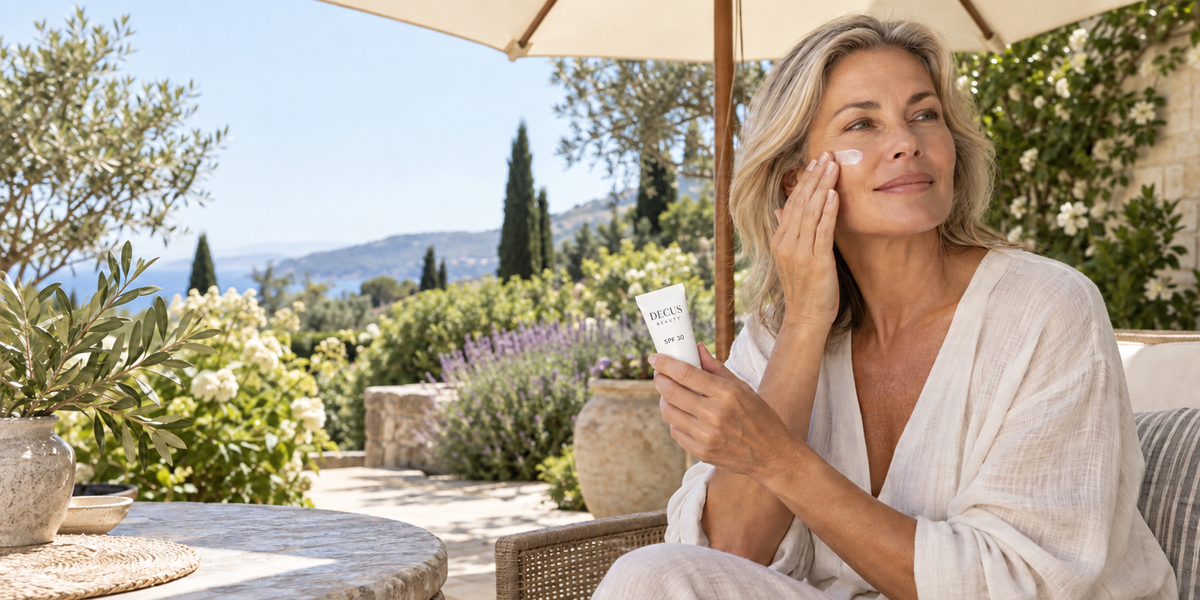
Approximately 1/4 teaspoon (or two full finger lengths of product)
Apply as the final step in your morning routine:
1. Cleanse
2. Tone
3. Serum
4. Moisturizer
5. SPF
When outdoors, reapply at least every 2 hours, and sooner after swimming, sweating, or towel drying, according to the product label.
Makeup with SPF is not enough on its own.
SPF in moisturizer is rarely sufficient unless applied very generously.
Protection requires proper quantity.
Choosing the Right SPF After 40
Look for:
• Broad-spectrum protection (UVA + UVB)
• SPF 30 minimum (SPF 50 preferred for pigment concerns)
• Formulas that support barrier health
• Non-irritating, fragrance-free options
The right sunscreen should feel wearable. If it feels heavy, chalky, or irritating, you won’t use enough. And daily use is what matters most.
“But I’m Not in the Sun Much.”
Most sun damage is not from dramatic exposure.
It’s from incidental exposure:
• Driving
• Walking to the car
• Sitting near windows
• Running errands
• Brief outdoor activity
These minutes accumulate into years. And cumulative exposure is what ages skin.
The Non-Negotiable Step
SPF is not about fear. It is about preservation.
It preserves:
• Collagen
• Elasticity
• Even tone
• Skin clarity
• Long-term resilience
If you are investing in your skin, in serums, moisturizers, treatments, then SPF is the step that makes all of it meaningful.
Without it, you are correcting while continuing to damage. With it, you are protecting what you build.
So, do women over 40 need sunscreen every day? Yes - SPF is not optional after 40. It is the single most powerful anti-aging product you will ever use.
And unlike aggressive treatments, it works quietly, consistently, and protectively. Radiance is easier to maintain than to rebuild. Protect your skin accordingly.
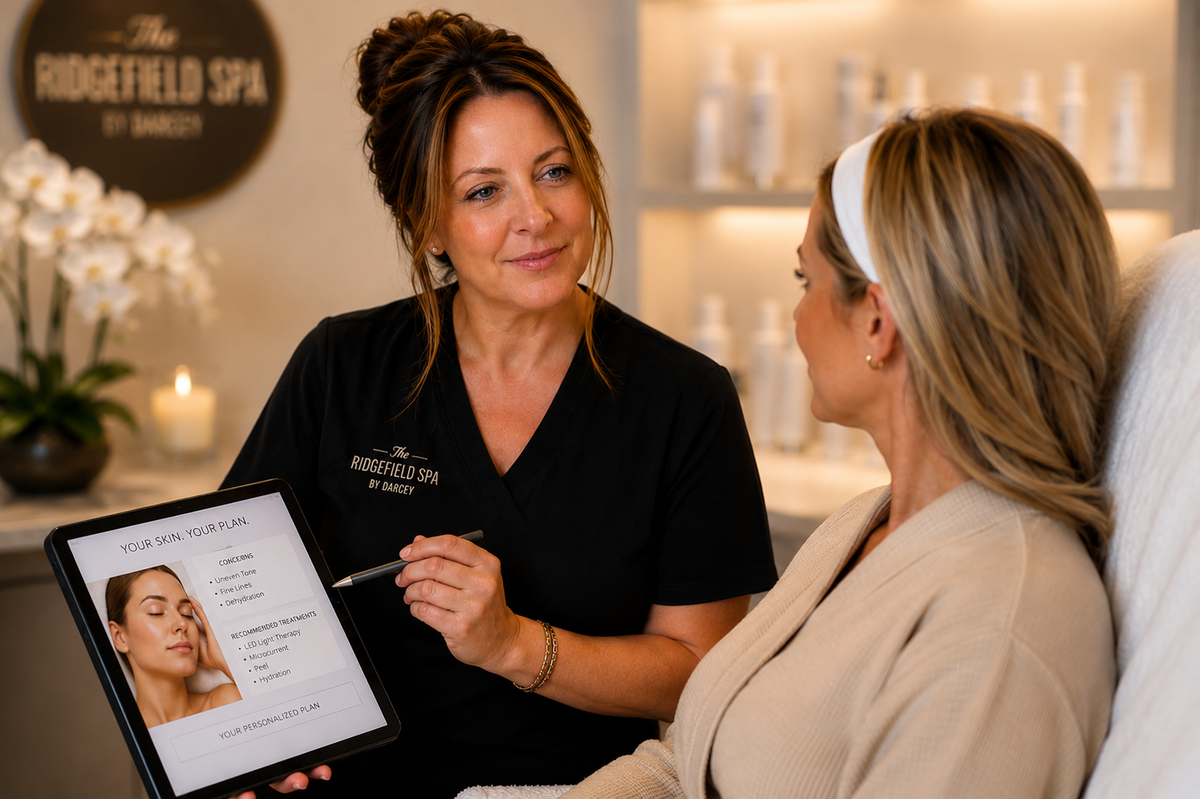
Concerned about visible sun damage or choosing products for changing skin? Book a customized facial at The Ridgefield Spa by Darcey, in Ridgefield, CT, for personal guidance.

Written by Darcey Wulkan