Do I Need Eye Cream After 40 And Why Your Moisturizer Isn’t Enough
The eye area is often the first place we notice change. Fine lines that weren’t there before. A little creasing when smiling. Puffiness that lingers longer. Darkness that wasn’t present five years ago.
And two of the most common things I hear are:
- "Do I need eye cream after 40?"
- “Can’t I just use my regular moisturizer?”
Technically, you can. But scientifically, it’s not ideal. Let’s talk about why.
Why the Eye Area Is Different
The skin around your eyes is structurally unique. It is:
- Thinner than the rest of the face
- Lower in oil glands
- Lower in collagen density
- More prone to dehydration
- Constantly moving (blinking 15–20 times per minute)
After 40, these natural differences become more pronounced as collagen declines and lipid production slows.
This makes the eye area more vulnerable to:
- Fine lines
- Crepey texture
- Puffiness
- Dark circles
- Irritation
It also means it requires more precise formulation.
Why Moisturizer Is Not Intended to Be Eye Cream
Facial moisturizers are formulated for the skin of the cheeks, forehead, and jawline, areas with thicker tissue and more oil production.
They often contain:
- Higher concentrations of active ingredients
- Fragrance components
- Stronger peptides
- Higher acid percentages
- Heavier occlusives
The eye area cannot tolerate the same intensity.
Using regular moisturizer under the eyes can lead to:
- Milia (tiny white bumps)
- Puffiness from heavy occlusives
- Stinging or watering
- Increased creasing
Eye creams are formulated specifically to:
- Be ophthalmologist-tested
- Use lower, controlled concentrations of actives
- Avoid migration into the eye
- Support delicate tissue without overwhelming it
This is not marketing. It’s anatomical reality.
What Happens to the Eye Area After 40
As estrogen declines:
- Collagen production decreases
- Skin becomes thinner
- Circulation slows
- Fluid retention patterns shift
This contributes to:
- Hollowing
- Increased shadowing
- Loss of firmness
- Persistent puffiness
At this stage, hydration alone is not enough. The eye area benefits from targeted support.
What a Well-Formulated Eye Cream Should Contain
A thoughtful eye cream focuses on three priorities:
1. Hydration Without Weight
Look for:
- Hyaluronic acid
- Glycerin
- Sodium PCA
Hydration plumps fine lines, but must be lightweight.
2. Barrier & Structural Support
Look for:
- Peptides
- Ceramides
- Beta glucan
- Cholesterol + fatty acid blends
These reinforce thinning tissue and improve elasticity over time.
3. Circulation & Brightening Support
Look for:
- Caffeine
- Niacinamide
- Antioxidants
These help address puffiness and uneven tone gently. The goal is gradual strengthening, not aggressive correction.
Common Eye Care Mistakes
- Using facial retinol directly under the eyes without guidance
- Applying too much product
- Rubbing instead of pressing
- Skipping eye care entirely
- Expecting overnight transformation
The eye area responds best to consistency, not intensity.
How to Apply Eye Cream Correctly
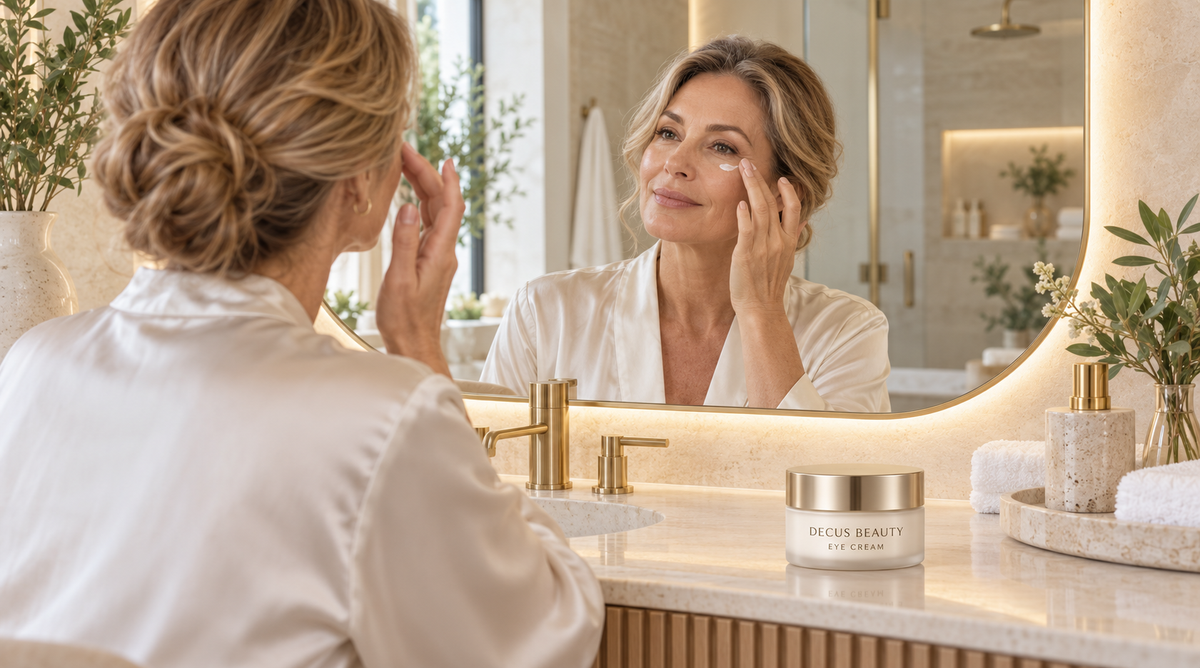
Use a pea-sized amount for both eyes. Apply with your ring finger (it naturally applies less pressure). Gently press along the orbital bone, not directly into the lash line.
Morning and evening use is ideal. And remember, eye cream should feel supportive, never heavy.
Do You Really Need an Eye Cream?
Yes. Especially if you are over 40 and noticing:
- Fine lines
- Crepiness
- Puffiness
- Dark circles
- Increased sensitivity
Then yes, a targeted eye formulation will make a meaningful difference. Not because it replaces your moisturizer. But because it is designed for tissue your moisturizer was never meant to treat.
The Real Goal
The goal is not to erase expression. It’s to support resilience. Healthy eye skin looks smooth, hydrated, and awake, even with movement.
And like all good skincare, improvement comes from protection, barrier stability, consistency, and intelligent formulation. Not force.
When the delicate skin around the eyes is supported properly, the entire face looks more rested, balanced, and luminous.
For personalized eye-care recommendations book a customized facial at The Ridgefield Spa by Darcey in Ridgefield, CT. Explore the Decus Beauty selection of eye creams to find one that’s right for you.

Written by Darcey Wulkan