How to Repair Your Skin Barrier After 40: The Missing Step in Your Skincare Routine
If your skin feels tight, sensitive, persistently dry, or suddenly reactive, even when you’re using good products, your skin barrier may be compromised.
For women over 40, changes in oil production, moisture retention, and skin renewal can make the barrier more vulnerable and slower to recover.
So, what exactly is your skin barrier, and how can you help restore it?
What Is the Skin Barrier?
Your skin barrier is the outermost part of the epidermis, known as the stratum corneum. It works alongside the acid mantle, a thin, mildly acidic film on the skin’s surface.
Together, they help:
- Prevent excessive moisture loss
- Protect against irritants and environmental stressors
- Support a balanced skin microbiome
- Keep skin comfortable, hydrated, and resilient
When the barrier is healthy, your skin generally feels smooth, calm, hydrated, and comfortable.
When it is compromised, you may notice:
- Dryness that does not improve
- Sensitivity, redness, or irritation
- Stinging or burning when applying products
- Tightness after cleansing
- Flaking or rough texture
- Breakouts that appear alongside irritation
Why Barrier Damage Is More Common After 40
As skin matures, natural oil production and moisture retention can decrease. Hormonal changes during perimenopause and menopause may also contribute to increased dryness and sensitivity.
At the same time, skin renewal gradually slows, and the barrier may take longer to recover after irritation.
This can make mature skin more vulnerable to:
- Over-exfoliation
- Harsh or foaming cleansers
- Hot water
- Dry or cold weather
- Sun exposure
- Using too many active ingredients at once
Signs Your Skin Barrier Needs Repair
Your skin barrier may need additional support if:
- Your skin feels dry even after moisturizing
- Products that never bothered you begin to sting
- You notice increased redness or sensitivity
- Your skin feels tight after cleansing
- Your complexion looks dull, rough, or uneven
- Your skin suddenly becomes difficult to manage
These are not always ordinary dry skin concerns. They may be signs that your routine is overwhelming your skin’s protective barrier.
How to Repair Your Skin Barrier After 40
1. Simplify Your Routine
Temporarily reduce the products most likely to cause irritation, including:
- Exfoliating acids
- Facial scrubs
- Retinoids
- Strong active ingredients
- Products containing drying alcohol or heavy fragrance
If you use a prescription product, follow the guidance of your prescribing provider before changing how you use it.
During barrier repair, focus on calming, hydrating, and protecting your skin rather than aggressively correcting it.
2. Use a Gentle Cleanser
Choose a mild, non-stripping cleanser that removes makeup, sunscreen, and impurities without leaving your skin feeling tight.
Use lukewarm rather than hot water, and avoid scrubbing or cleansing more frequently than necessary.
A suitable cleanser should:
- Clean effectively without stripping the skin
- Help maintain natural oils
- Leave the skin feeling comfortable
- Support rather than disrupt the skin barrier
3. Rebuild With Barrier-Supporting Ingredients
Look for ingredients such as:
- Ceramides
- Fatty acids
- Cholesterol
- Glycerin
- Hyaluronic acid
- Squalane
These ingredients help replenish moisture, reduce water loss, and support the skin’s protective structure.
4. Layer Hydration Properly
Hydrating products work best when applied in the proper order:
- Apply a hydrating serum to slightly damp skin
- Follow with a moisturizer to help seal in hydration
- If your skin is extremely dry, consider a richer cream at night
- For more guidance, read Moisturizers: How to Choose the Right One for Your Skin’s Needs After 40
5. Protect Your Skin Every Day
Apply a broad-spectrum sunscreen with SPF 30 or higher every morning.
Sun exposure can contribute to inflammation, moisture loss, and further weakening of an already-compromised barrier. Daily protection is essential, even during the winter or on cloudy days.
6. Be Consistent and Give Your Skin Time
Barrier repair does not happen overnight. Depending on the degree of irritation, improvement may take several days or a few weeks.
With a gentle and consistent routine, you may notice:
- Less sensitivity
- Improved hydration
- Reduced redness and irritation
- Smoother texture
- Stronger, more resilient skin
Avoid reintroducing multiple active products at once. Add them back gradually so you can see how your skin responds.
When Professional Guidance Can Help
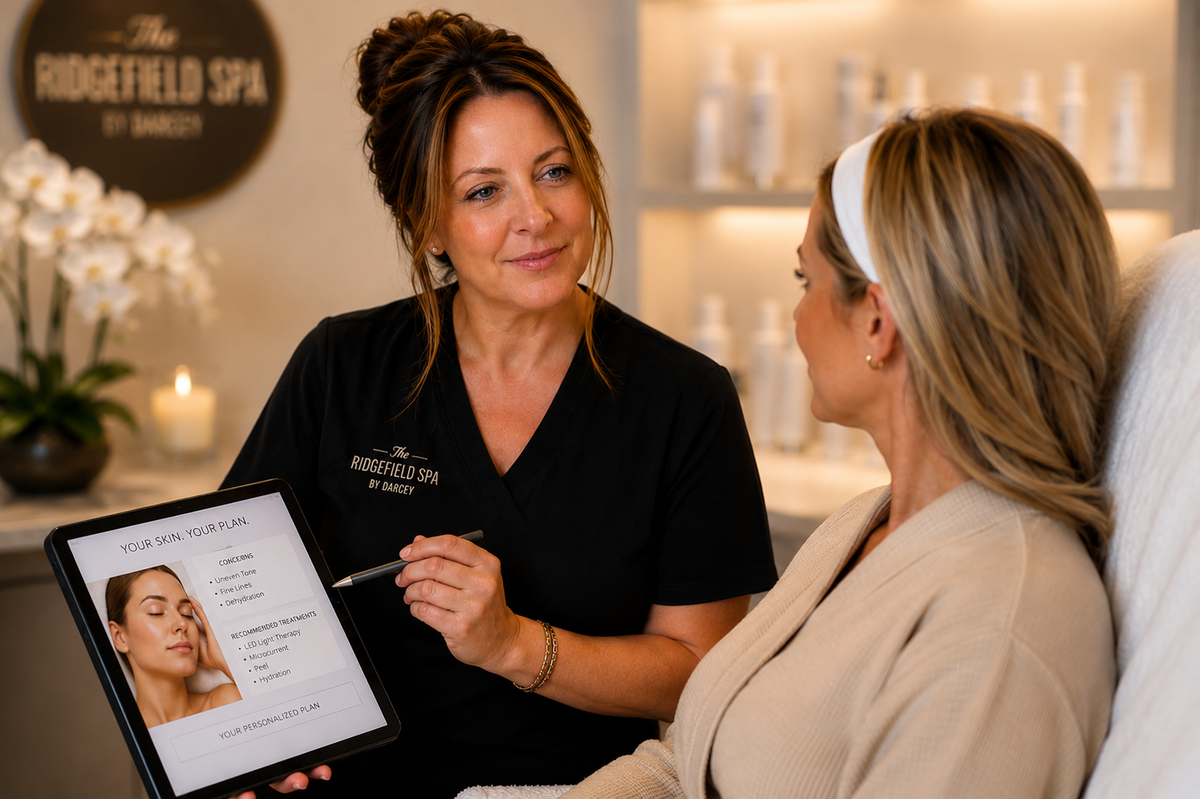
A customized facial can help replenish hydration, calm visible irritation, and support healthier-looking skin without overwhelming it.
At The Ridgefield Spa by Darcey, every treatment and home-care recommendation is selected according to your skin’s current condition, tolerance, and needs, not simply your age or skin type.
Explore my Customized Facial Rituals or schedule an appointment for personalized guidance.
Final Takeaway
If your skin feels unpredictable, sensitive, or persistently dry, adding more products may not be the answer.
A simplified routine, barrier-supporting ingredients, proper hydration, and daily sun protection can help your skin become calmer, stronger, and more resilient.
Healthy, radiant skin begins with a healthy skin barrier.

Written by Darcey Wulkan